Wednesday, November 3, 2010

The only reason I still care about politics: thoughts on the 2010 midterms

A couple thoughts on the midterm elections.

1. The system works just the way the founders wanted it to: the volatile House switches parties to reflect the fickle passions of the masses, while the Senate holds those passions in check. For the last two years, we Democrats have complained about the dysfunctional Senate and its progress-killing filibuster rule - and yet in the end, the Senate's built-in conservatism turns out to be the liberals' levy against a tide of un-reason. Or as James Madison put it, a buffer against the tendency of a more democratic body to "yield to the impulse of sudden and violent passions, and to be seduced by factious leaders into intemperate and pernicious resolutions." While I can't understand how the electorate can change its mind so quickly on who to vote for, the Founders anticipated this and built in safeguards against the will of the people. And in November 2010, at least, the Senate did its job.

2. But there's one problem beyond the founders' foresight, and that problem is global climate disruption. In general, I'm fine with the government staying out of things and letting people go about their business; the Founders did a great thing by setting up government to check itself. That was especially true when the chief problem they were trying to solve was that of tyranny.

But they largely solved that problem; tyranny, though a major problem in the 18th century, just isn't something we need to worry about anymore. When free health care is the worst thing the government can do to you, you know things are pretty good. The chief problem of THIS century, global climate disruption, is not one of too little freedom, but one of too much license to live irresponsibly. It's the one problem that's both big enough--truly big enough--to matter, and requires government to solve it. And for members of government to sell out God's earth to protect money-making (or ignorance) is an abomination of Biblical import.

Honestly, if it weren't for this issue, I probably wouldn't care about politics. Because the truth is, Republican or Democrat, life goes on. The economy will eventually get back on track. People will still fall in love. Babies will still be born, and kids will still play football. And all the while, asphyxiating carbon dioxide will still build up in the atmosphere, with potentially unimaginable consequences. And that's why I still care.

3. Apparently the only part of the American economy that's generating jobs is the CNN political newsroom. The funniest moment of the night (for me) was the first time I saw CNN's camera pan away from one panel of 8 political "experts" onto a second table of about 6 different "experts." Maybe if you get enough people who have no idea what they're talking about all shouting at the same time, you can confuse the audience into not fast-forwarding their DVR through the commercials.

4. The second funniest moment: on a break to commercial, the voice says "'Election Night in America' brought to you by Exxon Mobil." Seems to explain everything...

Monday, October 11, 2010

Build S***


You know what the trouble is? We used to make s*** in this country, build s***. Now we just put our hand in the next guy’s pocket.
- Frank Sobotka


Not much is more blue-collar and un-disagreeable-with than infrastructure. Roads, bridges, rail, water pipes, ports, smart grid – real stuff built by real Americans. It’s both the foundation on which the private economy rests, and the oil that allows it to run smoothly—and with most of it decades to centuries old, it’s time to upgrade. Ezra Klein has a great post on why it’s more important now than ever to invest in infrastructure:

The Council of Economic Advisers has a report (pdf) out today making the case for more infrastructure investment…

Lots of stimulus programs can create jobs. But infrastructure investment creates the right jobs, for the right people, doing the right things -- and at the right time. Or, to say it more clearly, infrastructure investment creates middle-class jobs for workers in a sector with high unemployment and it puts them to work doing something that we actually need done at a moment when doing it is cheaper than it ever will be again.

[…]

And then there are all the other arguments you've heard me make. Raw materials are cheap. Labor -- due to the high unemployment rate -- is cheap. Borrowing money is cheaper than at any time since the 1950s. And this is one sector where the normal deficit objections simply don't apply. "You run a deficit both when you borrow money and when you defer maintenance that needs to be done," Larry Summers told me. "Either way, you're imposing a cost on future generations." Not spending a dollar on infrastructure repairs today means we'll have to spend it tomorrow -- and by that time, it will cost more than a dollar. More so than anything else I can think of in the economy, infrastructure investment is win-win-win-win, and I'm not certain I've tacked enough "wins" on there.

That last point is especially important, because it neutralizes the typical “deficits bad” argument: we HAVE to repair our crumbling infrastructure at some point, so why not get it out of the way now when interest rates are low and borrowing is cheap? In fact, this is exactly what the private sector is doing, with companies like Microsoft issuing billions of dollars of debt at low interest rates even though they haven’t figured out what to spend it on yet besides share buybacks. That’s why deficit hawks would make terrible businessmen: because they’d never be willing to issue debt to finance investments.

I’ll add one more point of my own – this is the stuff that is unquestionably the role of government. No matter what you think about OTHER government interventions in the economy, even the most hard-nosed libertarian would never argue that natural monopolies like roads or utility lines should be wholly privatized.

So the arguments typically leveled against OTHER government spending, whether “government power bad” or “deficits bad,” simply do not apply to infrastructure spending. Like energy efficiency, it’s not just a win-win—it’s a win-win-win-win.

I’m sure extremists will still dream up ways to argue that the government should not spend money building roads and bridges, but for most of us, it’s the sort of no-brainer that everyone should be for.

RELATED POSTS

Deficit hawks would make terrible businessmen

Yes, government creates jobs

Monday, October 4, 2010

Free Market Firemen Watch as Home Burns to Ground

Taxes sure suck… until your house catches on fire and you need taxpayer-funded firemen to put it out.

That’s the lesson an Obion County, TN family learned last week—whose house burned down as firefighters stood watching because the family hadn’t paid their $75 fire department fee:

Imagine your home catches fire but the local fire department won’t respond, then watches it burn. That’s exactly what happened to a local family tonight. A local neighborhood is furious after firefighters watched as an Obion County, Tennessee, home burned to the ground.

The homeowner, Gene Cranick, said he offered to pay whatever it would take for firefighters to put out the flames, but was told it was too late. They wouldn’t do anything to stop his house from burning. Each year, Obion County residents must pay $75 if they want fire protection from the city of South Fulton. But the Cranicks did not pay. The mayor said if homeowners don’t pay, they’re out of luck. This fire went on for hours because garden hoses just wouldn't put it out.

It wasn't until that fire spread to a neighbor's property, that anyone would respond. Turns out, the neighbor had paid the fee.

"I thought they'd come out and put it out, even if you hadn't paid your $75, but I was wrong," said Gene Cranick. [...]


We asked the mayor of South Fulton if the chief could have made an exception. “Anybody that’s not in the city of South Fulton, it’s a service we offer, either they accept it or they don’t,” Mayor David Crocker said.

And you know what? I almost agree with the mayor. The Cranicks took an irresponsible gamble that they could free ride off other people’s fire department fees… and they lost. If you don’t want to pay your taxes, don’t blame me when you get burned.

Almost. The only problem with this way of thinking is that fires don’t exactly stay put, and they don’t just harm the irresponsible people who don’t pay for fire protection. Check out the bold text above. The next door neighbor was responsible, paid his $75 fee so he’d be protected from fire… and yet saw his house catch fire anyway because his neighbors exercised their “freedom” to not pay a fire protection fee.

It’s a lesson on the limits of rugged individualism: you’re free to do whatever you want on your property, until the effects of whatever you’re doing spread onto my property (or into a commons like the atmosphere or ocean). And in today’s interconnected world, where we find ourselves increasingly at the mercy of actions taken by people we’ve never met, we’ve all got a bit more say in the risks others take, whether with fires, finance, or fossil fuels.

It’s why bailouts were necessary—not because we want to save an irresponsible few from the consequences of their actions, but because the actions of those few could have brought down the entire system. You wouldn’t let a boat sink to punish the captain for hitting an iceberg. Likewise, innocent businesses shouldn’t suffer to punish a few irresponsible financiers.

There’s also a global warming lesson here for Joe Romm. Because like fires, pollution doesn’t stay put—and like a fire spreading from your house to mine, as soon as the pollution leaves your property, I have every right to tell you to stop.

If my neighbor’s house catches fire, it could spread to mine—meaning I have a right to make that neighbor to pay for fire protection. If an Arkansas farmer dumps his farm waste into the Mississippi River, it travels down to the Gulf where it fertilizes algae and starves fish of oxygen—meaning that those fishermen have a say in what the farmer does with his waste (or else they must be compensated). And if a utility decides to burn coal to save money, the CO2 gets into the atmosphere and wreaks havoc on the climate other people depend on—meaning that we have a say in the utility’s choice of fuel.

I’m basically a libertarian: do what you want, as long as you only hurt yourself. I would be fine with other people’s right to burn coal and drive Hummers if they were the only ones who had to live with the consequences of global warming. But that’s not the world we live in. No matter how energy conscious I am, no matter whether I live close to work and don’t drive, my responsible choices can’t protect me or my children from the pollution-intensive lifestyles of others.

Like it or not, we’re all in this together. As the Cranick family found out, we now live in such close connection to others that one person’s rugged individualism can set his neighbor’s house on fire, mortgage loans in California can bring down banks in New York, and Hummer-driving soccer moms in Kansas can affect monsoon seasons in Bangladesh. And as soon as the CO2 exits someone else’s tailpipe and enters my atmosphere, it absolutely becomes my business.

Monday, September 20, 2010

Deficit hawks would make terrible businessmen: a simple explanation of how the stimulus package works to boost the economy

For anyone running a business, living within your means is overrated. Sometimes you have to spend money to make money—even when the money’s not there. The metaphor of a family balancing its budget around the kitchen table simply doesn’t apply to a business, because businesses (1) can borrow money at low cost, and (2) can use that borrowed money to make more money.

Think about it this way. If a family borrows money to buy a flat screen TV or granite countertops, it will eventually have to curtail consumption elsewhere to pay back the loan (as long as its income remains constant). After all, the money has to come from somewhere. There are a few exceptions—for example, borrowing money to pay for education, or borrowing money to insulate your house and cut your utility bills, both will provide a future cash flow with which to pay back the loan. But those are investments, not costs. And unless you’re using borrowed money to make more money, you’ll eventually have to cut back. (This is why home equity loans are a scam, as mortgage industry veterans I’ve spoken with readily admit—unless you sell your house, you won’t actually have the cash to pay back the loan.)

Unlike a family at the kitchen table, businesses—especially large ones—do not operate under these constraints, because businesses have access to credit. When a business wants to expand, it can borrow money from a bank or issue debt on the capital markets (e.g. sell bonds). Unlike granite countertops, business debt generates future cash flows (either by increasing revenues or reducing costs) out of which to pay off the debt—and hopefully leave some leftover for the business. For example, a business might issue bonds to finance new plant equipment that will produce more products, or to buy automation software that will reduce its operating costs. Even though the business's debt increases, both investments generate cash that can be used to pay back the debt. A CEO who looked out at his market and said, “well, there are a ton of customers out there waiting to buy our product, but I can’t hire salespeople to reach them because I don’t have the money” would be justly fired for failing to take advantage of his credit access (assuming he did indeed have access to credit).

In other words, if everyone lived within their means, the economy would never grow.

The federal government is more like a business than a family around the kitchen table, because the federal government can borrow money at exceptionally low interest rates, and use it to make investments that grow the economy—or at least prevent it from shrinking—and pay back the loans out of the increased tax revenue.

That’s the logic behind stimulus. In the days following Lehman, the economy was in danger of entering a self-fulfilling death spiral. Banks stopped lending, meaning that businesses couldn’t borrow cash to pay their workers or keep the lights on. Laid off workers—or workers in fear of future layoffs—stopped spending money, reducing businesses’ revenues and forcing them to lay off more workers, further reducing business’ revenues: a positive feedback loop. As incomes fell, the federal government would have taken in less in tax revenue, increasing the deficit. And if the recession turned into a multi-year depression, trillions of dollars in expected government revenues would have simply vanished—meaning that as high as the deficit is now, it would have been even bigger without stimulus.

So like any good businessman, Presidents Bush and Obama borrowed money to stop the economy from collapsing. They injected capital into banks to ensure lending could continue and companies could meet payroll. They bought products from companies who would have otherwise had to lay off workers. They sent unemployment checks to workers so they could continue buying food and basic necessities. And in doing so, they preserved government revenues which otherwise would not have been available to pay off debt. In other words, stimulus is not government spending—it is government investment.

Don’t believe me? Ask the market: 10-year Treasury bond yields are down below 2.75%, which means that the market believes there is a very low risk that the federal government will not pay them back. So free marketers are left in a very tight double bind: either government stimulus works, or the Market is wrong. Either way, the orthodoxy dies.

RELATED POSTS

Yes, government creates jobs

Friday, September 17, 2010

Mike Huckabee inadvertently makes the case for health care reform

Mike Huckabee makes the case that health care reform is bad because covering people with pre-existing conditions is expensive for insurance companies:

"And a lot of this, it sounds so good, and it's such a warm message to say we're not gonna deny anyone from a preexisting condition. Look, I think that sounds terrific, but I want to ask you something from a common sense perspective. Suppose we applied that principle that you can just come along with whatever condition you have and we're gonna cover you at the same cost we're covering everybody else 'cause we wanna be fair. Okay, fine. Then let's do that with our property insurance. And you can call your insurance agent and say, 'I'd like to buy some insurance for my house.' He'd say, 'Tell me about your house.' 'Well sir, it burned down yesterday, but I'd like to insure it today.' And he'll say 'I'm sorry, but we can't insure it after it's already burned.' Well, no preexisting conditions.

"How would you like to be able to call your insurance agent for your car and say 'I want you to insure my car.' 'Well tell me about your car.' 'Well it was a pretty nice vehicle until my sixteen year-old boy wrecked it yesterday. [He] totaled the thing out but I'd like to get it insurance so we can get it replaced.' Now how much would a policy cost if it covered everything? About as much as it's gonna cost for health care in this country."

Actually, these analogies prove the case FOR health care reform. In the first place, this is exactly the reason the health reform bill contains the unpopular “individual mandate,” which requires every American to buy health insurance: if people are allowed to wait until after they get sick to buy insurance, of course everyone will do so, and the insurance industry will collapse. In other words, the health care reform bill already solves exactly the problem that Huckabee brings up.

But more fundamentally, Huckabee’s examples show why private insurance is not necessarily the best way to pay for health care in the first place. Just like home insurances companies don’t want to insure hurricane-prone houses in Florida because they are likely money losers, health insurance companies don’t like to insure people who are likely to need health care—because the insurer will have to pay for it. And do you really want to trust your health care to someone who has a profit motive to not give it to you?

RELATED POSTS

Are Sarah Palin and Martin Feldstein closet universal health care supporters?

There's no money in selling insurance to sick people: more reasons free markets don't work in health care

WSJ inadvertently supports case for health care reform: do you want to trust your health to profit and loss?

The Catch-22 for Opponents of Health Care Reform

The Takeover: What opponents of health care reform don't get

Thursday, September 16, 2010

Mike Castle's loss: When what's good for the Democrats is bad for the country

By now you’ve heard that Mike Castle, the moderate Republican running in his party’s Senate primary in Delaware, was shockingly defeated by Tea Party radical Christine O’Donnell. The consensus in the Beltway is that this is great news for Democrats, as they now get to face off against a tax-evading lunatic instead of a two-time governor. Even Karl Rove was disappointed.

As a Democrat, you’d think I’d be thrilled. But I’m not. Because in this case, what’s good for Democrats is bad for the country. What this country needs isn’t more liberal Democrats—we need more moderate Republicans.

The problem is that as a smaller Republican Party becomes dominated by an increasing percentage of right-wing zealots, those zealots gain increasing power to pressure the few remaining moderates to toe the line on orthodoxy. Just look at John McCain, who as recently as 2008 supported cap-and-trade in his official campaign platform, and now calls it “cap-and-tax.” No Republican can work with Democrats in this climate, even on issues they AGREE on, because they’re afraid of being singled out for extermination.

As the Republican leadership pulls further rightward, it pulls rank-and-file voters with it, as voters change their views on the issues to align with the dominant views of the party they want to vote for. Decades of political science research shows that party identification is by far the number one driver of voting behavior — not issue positions or even liberal-conservative ideology. So as the party becomes more radical, some voters do indeed abandon ship, but the vast majority find themselves voting for more radical candidates, hence radicalizing their own views ex post facto to align with the choices they’ve found themselves making. (Which, incidentally, is why it’s absurd for politicians to change their views willy-nilly to match whatever they think voters want).

The media is no watchdog either, because it too views politics through the lens of party horserace and not ideology. If Republicans don’t support the President’s policies, the media automatically interprets this as a lack of bipartisanship on his part instead of his opponents’ radicalism. So when the Republican leadership opposes bread and butter measures like improvements to roads and bridges, these become “controversial government spending” instead of “common sense investments.” Heck, in this climate, if the President proposed giving little American flags to war widows, it would quickly become controversial.

But if just a few more moderate Republicans could slip in the door, they could form a critical mass that would give others the political cover to work with Democrats on common sense measures to move the country forward. If ten Republicans got together on cap-and-trade, it would no longer be a Democratic proposal—it would be a bipartisan one. But that’s just not possible with so few lonely moderates left.

Who knows, if the chance arose, I might vote for a moderate Republican over a liberal Democrat… if DC residents had a vote, that is.

Strict constructionist ref denies Detroit Lions a victory, makes case for referee activism on Calvin Johnson call

I’m a big believer that rules should be allowed to bend as common sense dictates. Case in point: in Sunday’s Bears-Lions game, receiver Calvin Johnson’s would-be game-winning touchdown catch that was ruled a drop by the ref.


Of course, the catch (pun intended) is that technically, the call was correct. The NFL rule states:

If a player goes to the ground in the act of catching a pass (with or without contact by an opponent), he must maintain control of the ball after he touches the ground, whether in the field of play or the end zone. If he loses control of the ball, and the ball touches the ground before he regains control, the pass is incomplete. If he regains control prior to the ball touching the ground, the pass is complete.

But even if the call was correct, it still wasn’t right. Anybody who watched the play knew that Calvin Johnson caught that ball. Even if the letter of the law said it was a drop, common sense tells us it was a catch. We just know it.

I wonder what Antonin Scalia would have thought? Should the refs be strict constructionists and call the game by the letter of the law? Should the NFL add even more caveats and conditions to specify exactly what a catch looks like? Or should the rules be simplified and refs given the freedom to make judgment calls when common sense dictates?

I think we need a little referee activism.

RELATED POSTS

Please somebody ban the phrase "judicial activism"

Friday, August 27, 2010

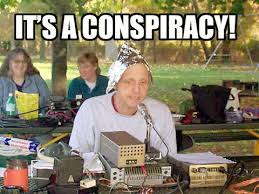
Accountants join the climate conspiracy

After “climategate” exposed the massive conspiracy by scientists, politicians, economists, the summer heat, and plants and animals to fabricate global warming, we deniers thought we’d finally been vindicated. It was a total coup.

More confirmation of the conspiracy came as investigation after investigation after investigation after investigation cleared the scientists of any wrong-doing and reaffirmed support for the science of global warming. If so many independent investigations found no wrongdoing, the logical conclusion is not that there was in fact no wrongdoing, but that all these investigators are colluding to cover up the facts. So convinced are we of this that we’re launching an investigation of the investigations—this one by one of our own to make sure it says what we want!

But if the lack of any evidence of a conspiracy isn’t enough proof that there is one, we now have the clearest evidence yet: noted socialist behemoth KPMG has just completed an audit of the IPCC chief’s finances—and surprise surprise, it cleared him of any wrongdoing.

As a result, the newspaper that had published the original smear against the IPCC retracted its story and apologized to the IPCC chief.

So even accounting firms are in on the global warming conspiracy? At this point, the only thing that could prove to me that there is no conspiracy to make up global warming is for scientists to say that it isn't happening. Only then could we trust them.

Clearly, the possibility that global warming is, in fact, real is far too simple an explanation.

RELATED POSTS

Riddle me this: who's the king climate conspirator?

The silver bullet proving there's no climate conspiracy

The history of global warming science: where did the conspiracy start?

Follow the money trail to the global warming conspiracy? It leads straight to 1211 Avenue of the Americas

Tuesday, August 24, 2010

Riddle me this: who's the king climate conspirator?

Imagine you're an FDA regulator, and a pharmaceutical company is trying to get your approval for a new drug that they think will generate $4 billion in sales annually for 10 years. But you've only got two scientific studies to go by. The first is a university study, and concludes that the drug has dangerous side effects that will cause brain damage or death in 5% of people who use it. The second study is industry-sponsored - and it concludes that links between the drug and health problems are "inconclusive."

Who you gonna believe? I thought so.

Now, here's a second riddle for you. Which one of the following is the most likely scenario:

1. There's a vast conspiracy among the world's scientists to fabricate massive amounts of evidence about the functioning of the earth's climate so they can impose socialist world government on all of humanity.

2. There's a vast conspiracy by a multi-trillion dollar industry to cover up science that threatens its profits.

Any takers?

Of course, I guess there's a third option: that the vast majority of the world's scientists have been simultaneously and spectacularly wrong, wrong in the same direction, and getting more wrong over the last 40 years. But really, pretending that we're smarter than scientists isn't quite as fun as pretending they're conspiring against us.

RELATED POSTS

The silver bullet proving there's no climate conspiracy

The history of global warming science: where did the conspiracy start?

Follow the money trail to the global warming conspiracy? It leads straight to 1211 Avenue of the Americas

Monday, August 23, 2010

"Emboldening the terrorists"

Last week I argued that "the right of Muslims to build a mosque near Ground Zero is the very essence of what America means and is." Similarly, I argued that the mosque would actually be a strong signal against the power of terrorism to change us, rather than a sign of weakness that would embolden terrorists:

True weakness isn't giving in to Muslims who want to build a mosque, but in giving into our basest tribal fears of outsiders - the very fears that give "terrorism" its name. After the two towers came down, I said, "Build them back!" Far from a memorial, I wanted to tell the terrorists, "we won't be defined by this tragedy - you knock these towers down, we build them right back up." Similarly, a mosque at Ground Zero of the terrorists' handiwork is not a sign that they've won, but a monument to how little their handiwork has changed us - proof that their best efforts to sow fear has not shaken our commitment to freedom... for ALL Americans.

As usual, I've been proven right. From the Wall Street Journal (!), evidence that opposition to the mosque not only undermines American values of religious freedom, but directly aids terrorists in drumming up anger towards America and inspiring new recruits:

Islamic radicals are seizing on protests against a planned Islamic community center near Manhattan's Ground Zero and anti-Muslim rhetoric elsewhere as a propaganda opportunity and are stepping up anti-U.S. chatter and threats on their websites.

One jihadist site vowed to conduct suicide bombings in Florida to avenge a threatened Koran burning, while others predicted an increase in terrorist recruits as a result of such actions.

"By Allah, the wars are heated and you Americans are the ones who…enflamed it," says one such posting. "By Allah you will be the first to taste its flames."[...]

Jarret Brachman, director of Cronus Global, a security consulting firm, and author of the book Global Jihadism, said al Qaeda and other groups have long used imagery from the wars in Iraq and Afghanistan to recruit new members. But the U.S. position has been that those wars are not against Islam and that the U.S. has Muslim allies in the fight.

Anti-Muslim rhetoric in the U.S is different, since jihadists can use Americans' words to make the case that the U.S. is indeed at war with Islam. The violent postings are not just on al Qaeda-linked websites but on prominent, mainstream Muslim chat forums, Mr. Brachman said.

"We are handing al Qaeda a propaganda coup, an absolute propaganda coup," with the Islamic-center controversy, said Evan Kohlmann, an independent terrorism consultant at Flashpoint Partners who monitors jihadist websites.

You read that correctly.  Even the News Corp-owned Wall Street Journal recognizes the truth on this one: every protest against the mosque directly increases the chances that another terrorist attack will happen. It's an irony that's true from schoolyards to street corners to international conflagrations: many conflicts stem not from rational defense of self-interest, but from the emotional overreaction to an affront which in turn escalates an imagined threat to a real one.

As even more evidence that it's not just bleeding-heart liberals who support religious freedom, both the NYPD and FDNY have strongly condemned ads by NY gubenatorial candidate Rick Lazio opposing the mosque:

Unions representing the city’s firefighters and police officers immediately demanded that Mr. Lazio pull his most recent ad, calling it an affront. Ed Mullins, the head of the city’s police sergeants’ union, called the ads “as irresponsible as they are reprehensible.”

Tea Party protesters and New York City fire fighters clearly have different opinions over whether a mosque at Ground Zero is insensitive. I think I know who to side with in this affair.

RELATED POSTS

A pox on shock jocks who talk to block mosques: the case for building the mosque at Ground Zero

Tuesday, August 17, 2010

Enough ado about hockey sticks: the worst is yet to come

Global warming deniers are making another attempt at discrediting the famed "hockey stick" graph, based on a paper (McShane and Wyner 2010) that purports to show mistakes in its statistical methods. While I don't have the statistical chops to assess the validity of either party's math, I did want to make two observations.

First, as others have noted, even if you assume that the new paper is the "correct" version, it doesn't look much different from other hockey stick graphs - if anything, the hockey stick shape in the new study is more pronounced.

More importantly, the hockey stick graph ultimately matters very little for what we should do about CO2, since it only measures past temperatures up to around the year 2000. What we really care about isn't the past temperature increase we've already observed, but rather the much larger future increase that's still to come assuming we do nothing about CO2. And that isn't accounted for in any existing hockey stick graph. I've taken the liberty of (unscientifically) adding this onto the McShane and Wyner hockey stick graph, using a simple average of the IPCC's low-end (1.1 degrees C) and high-end estimates (6.4 degrees C) for 21st century temperature increase:


Looks more like a hockey skate! Despite deniers' strange obsession with the past and lack of concern for the future (perhaps by virtue of their conservatism), the bottom line is this: the reliability of past temperature reconstructions matter very little compared to what we have in store... and it's about to get a whole lot hotter.

If this looks familiar, here's why:


RELATED POSTS

The only thing you need to know about global warming

The cold logic of hockey sticks

Monday, August 16, 2010

A pox on shock jocks who talk to block mosques: the case for building the mosque at Ground Zero

When I was 18 and stranded in JFK airport for 7 1/2 hours on a high school trip to Europe, my English teacher Mr. Parris Bushong pointed to a group of three people--a dark-bearded Hasidic Jew, a suit-wearing white woman, and a paraplegic black man--all in a circle talking and laughing quietly together. "That, right there, is America," he said.

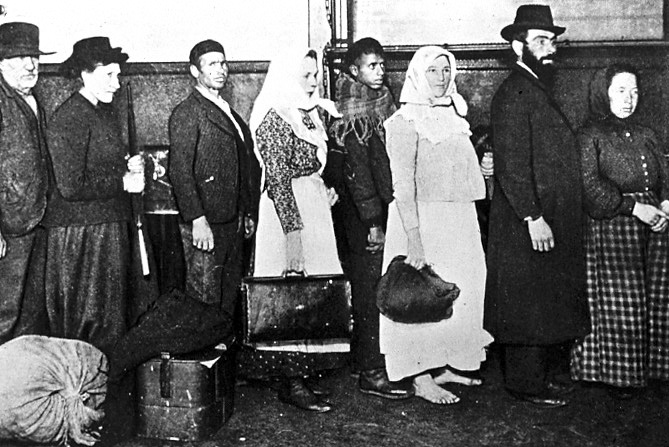
When I think of America, I don't just think of waving corn fields and dusty roads with pickup trucks: I also picture immigrants getting off the boat in New York City under the shadow of skyscrapers and the Statue of Liberty, opening Italian delis and Irish churches and Jewish textile shops, grimy beret-wearing kids carousing in the city streets shouting "youze guys wanna play some stickball?" - all in search of opportunity and freedom in the bubbling cultural milieu that is America.

So when a group of Muslims wants to build a mosque near Ground Zero, I say let them! - not because I begrudgingly accept their freedom to do something I disagree with, but because the right of Muslims to build a mosque near Ground Zero is the very essence of what America means and is. My image of America, of people coming together from all parts of the world to live and prosper together, is undermined less by the terrorists who flew planes into that great melting pot of a city than by the crazed hoards who now descend upon it, demanding that the very freedoms they say the terrorists want to destroy be revoked.

How are we even having this debate? What is the argument against the mosque - that it would be "insensitive" of people who share the same religion as the terrorists to build a mosque close to the site of the tragedy? But wouldn't that sort of depend on most Muslims being terrorists? Let me put it a different way: if you do not believe that most Muslims are terrorists, is it still possible to make a logical case for being offended by a mosque? Timothy McVeigh grew up Catholic and was both a Republican and NRA member - must cathedrals, elephant statues, and NRA ranges keep their distance from Oklahoma City?

In any case, whether or not I'm offended is kindof a moot point, as the Bill of Rights doesn't contain a right to not be offended. The freedom of religion, on the other hand, is protected not just by the First Amendment, but by the first words of the First Amendment. If we think it's fine to throw that away just because a religious building hurts our feelings, how can we even call ourselves Americans?

True weakness isn't giving in to Muslims who want to build a mosque, but in giving into our basest tribal fears of outsiders - the very fears that give "terrorism" its name. After the two towers came down, I said, "Build them back!" Far from a memorial, I wanted to tell the terrorists, "we won't be defined by this tragedy - you knock these towers down, we build them right back up." Similarly, a mosque at Ground Zero of the terrorists' handiwork is not a sign that they've won, but a monument to how little their handiwork has changed us - proof that their best efforts to sow fear have not shaken our commitment to freedom... for ALL Americans.

Opponents of the mosque say they are protecting "our way of life," but in America, that very phrase is a contradiction - for the American way of life (such that it exists) is defined by there not being a singly-defined American way of life. Whether someone wants to burn a flag or pledge allegiance to it, to build a mosque or a church or an organic garden, our freedom to do those things--not our opinions on their appropriateness--is what defines us as Americans.

Which is why when Sarah Palin and Newt Gingrich and the swarming masses, pulsating and waving signs with grotesque energy like some stepped-on ant colony, say that Muslims don't have a right to build a mosque at Ground Zero, they aren't just wrong: they stab at the heart of what it means to be an American. Restricting the right of a group of citizens to build a mosque in the name of protecting freedom is literally bringing Orwell's cryptic words to fruition: that all animals are created equal, but some are more equal than others.

The freedom of religion has always been America's first freedom, and a few raggedy terrorists hiding in caves aren't going to change that - that can only be done by those whose reptilian brains the terrorists whip into a fight-or-flight hysteria against outsiders.

Sunday, August 15, 2010

The greatest Onion article ever

The article speaks for itself:

"Millions Of Barrels Of Oil Safely Reach Port In Major Environmental Catastrophe"

PORT FOURCHON, LA—In what may be the greatest environmental disaster in the nation's history, the supertanker TI Oceania docked without incident at the Louisiana Offshore Oil Port Monday and successfully unloaded 3.1 million barrels of dangerous crude oil into the United States.

According to witnesses, the catastrophe began shortly after the tanker, which sailed unimpeded across the Gulf of Mexico, stopped safely at the harbor and made contact with oil company workers on the shore. Soon after, vast amounts of the black, toxic petroleum in the ship's hold were unloaded at an alarming rate into special storage containers on the mainland.

From there, experts confirmed, the oil will likely spread across the entire country's infrastructure and commit unforetold damage to its lakes, streams, and air.

"We're looking at a crisis of cataclysmic proportions," said Charles Hartsell, an environmental scientist at Tufts University. "In a matter of days, this oil may be refined into a lighter substance that, when burned as fuel in vehicles, homes, and businesses, will poison the earth's atmosphere on a terrifying scale."

"Time is of the essence," Hartsell added. "If this is allowed to continue, the health of every American could be put at risk."

...

"Our fear is that we'll start seeing this stuff in tanker trucks headed to gas stations all over America," Environmental Protection Agency official Ralph Linney said. "And once they start pumping it into individual cars for combustion, it's all over."

"How can we possibly contain this after it's spread to 250 million vehicles, each one going in a different direction?" he added.

Experts are saying the oil tanker safely reaching port could lead to dire ecological consequences on multiple levels, including rising temperatures, disappearing shorelines, the eradication of countless species, extreme weather events, complete economic collapse, droughts that surpass the Dust Bowl, disease, wildfires, widespread human starvation, and endless, bloody wars fought over increasingly scarce resources.

...

Noting that they have acted in strict accordance with U.S. laws and complied with the orders of federal regulators, representatives from ExxonMobil, BP, ConocoPhillips, the Kingdom of Saudi Arabia, and Chevron have all denied responsibility for the disaster.

Nice to see at least The Onion is covering the impacts of global warming.

RELATED POSTS

The Onion Reports the Truth on Health Care

A shocking moment of honesty from Big Oil: ConocoPhillips CEO says offshore oil isn’t economical without big government support, demands bailout

What happens when we delve too greedily and too deep - maybe Gandalf can stop the gusher

Why I'm not even mad at BP

Wednesday, August 11, 2010

There's hope for the world

Nickelback may have been the top selling band of the Bush era, but the world isn't quite over yet. The Arcade Fire's transcendent third album, The Suburbs, just hit #1:

They did it, folks-- more people bought Arcade Fire's third album, The Suburbs, than any other album in the United States last week. The news comes courtesy of their label, Merge, and label mates Spoon, who Tweeted, "Let the record reflect that Merge Records is the NUMBER ONE LABEL IN THE USA! Here's to Arcade Fire and Merge: #1 -- 156k copies sold." This comes after news of the group triumphing over the UK album charts this week as well, according to Billboard.

This is the band's first chart-topping album in the U.S. Their last LP, Neon Bible, debuted at number two. Independent rock music is pretty popular now, apparently!

For a little while at least, everything is just in the music world.

RELATED POSTS

30 million Nickelback albums and the decade from hell

Monday, August 9, 2010

Marceaux-Palin 2012

The hardest thing about writing that headline was figuring out who to put at the top of the ticket.

Sunday, August 8, 2010

A shocking moment of honesty from Big Oil: ConocoPhillips CEO says offshore oil isn’t economical without big government support, demands bailout

One of the complaints free marketeers frequently level against renewable energy is that it can’t survive without government support, whereas dirty fuels are economical in their own right. So when a major oil company CEO admits that offshore oil is only economical because of government support, that should cause any so-called libertarian to reconsider his beliefs.

We already knew that fossil fuels hardly compete solely on their own merits. Far from it: subsidies for dirty fuels dwarf those for clean energy. From 2002-08, the US spent about seven times as much subsidizing dirty energy than it did renewables. And an analysis by Bloomberg found that worldwide, governments spend twelve times more subsidizing dirty energy: $557 billion per year for fossil fuels vs. only $43-$46 billion for renewables. Government-dependent indeed.

But those are just the explicit subsidies: cash directly given to companies, or requirements to use specific fuels. The true shocker here is how heavily offshore oil development depends on anti-market protection from liability in order to be profitable. At least, that’s what ConocoPhillips CEO Jim Mulva unwittingly declared the other day. In an article entitled, “Unlimited liability for Gulf oil spills would kill development,” the Financial Times reports:

Jim Mulva, ConocoPhillips’ chief executive, says that the unlimited liability some are proposing in Congress to punish operators for further spills in the Gulf of Mexico is inappropriate. That would raise the question of how many of the smaller companies operating in the Gulf could afford to get back out there to work following the lifting of the moratorium and even whether the risk reward equation would favor going out into the waters again for the biggest of companies. He said to analysts:

We will not develop the resources if we have that situation.

It may have sounded like a threat, but it is also a realistic assessment of the situation.It is true that an increasing number of companies have been looking to the Gulf for prospects, given that it has been a good source of oil and natural gas over the years and new technology has made it even more so. But they will not risk their entire futures to get at the resources.

Mulva’s intent, of course, was to argue against imposing unlimited liability for oil spills. But assuming his statement was more than bluster, his implicit admission is that the risks of oil spills are so great that in a free market, the costs of paying for spill damages would outweigh the benefits of developing the resources.

Of course, the situation in the Gulf is hardly a free market, and neither oil companies nor Congressional Republicans have any interest in creating one (corporate welfare is good for the shareholders). Liability for damages from oil spills is capped at $75 million, which means that oil companies do not have to account for the full costs of oil production in their resource planning. It’s an implicit subsidy (or more accurately, a bailout): no matter how bad the damages to the tourism industry, the fishing industry, and the intrinsic value of the coastal ecology, oil companies will only ever have to pay $75 million to compensate them. Either the taxpayer picks up the tab, or the non-oil industries are just left with losses, while Big Oil gets bailed out.

In other words, when Jim Mulva or coastal congressmen say, “lifting the liability cap will hurt production and kill jobs,” what they’re actually saying is, “offshore production only occurs because of market-distorting protections that insulate companies from the consequences of their decisions and lead to overproduction of a resource.” Would making oil companies responsible for damages they cause reduce oil production and oil jobs? Probably. But jobs and money are not reasons to subsidize irresponsibility. There’s no constitutional right to drill for oil: if paying for the full cost of oil spills would make offshore drilling unprofitable, then offshore drilling probably shouldn’t be happening, and it’s not the government’s job to make it profitable.

And let’s not forget that for every offshore driller who’s hard at work, there’s also a fisherman whose fishing grounds are ruined by oil, and a hotel worker whose rooms are empty of tourists. If oil companies are insulated from liability, it means that drilling is necessarily happening in an economically inefficient manner, which likely means that the jobs destroyed by oil are greater than the jobs created by it.

If companies have rights just like people, then they also have responsibilities. Personal responsibility is not just for individuals.

RELATED POSTS

I actually agree with Rand Paul... sort of

What happens when we delve too greedily and too deep - maybe Gandalf can stop the gusher

Friday, August 6, 2010

Wednesday, August 4, 2010

Could Paul Ryan’s plan to abolish Medicare actually make sense?

Rep. Paul Ryan wants to get rid of Medicare and Medicaid, and replace them with vouchers to buy health insurance. In conservative circles, the idea is quietly ignored because it could be unpopular. In media circles, the idea has christened him as the intellectual leader of the Right (not because it’s a good idea, but because it’s an idea—a rare sight amount today’s Right). And in liberal circles, the idea has been lambasted as one which would gradually result in poor people unable to afford health care.

People poo poo the Ryan plan because his vouchers would increase more slowly than health care expenses currently are. So it stands to reason that over time, the voucher would buy less and less health care.

Of course, the key assumption here is that health care costs would continue rising at the same rate after Ryan’s plan were passed. But that’s not necessarily a safe assumption, because our willingness to pay a lot for health care isn’t just a result of high health care costs—it is also a cause.

Part of the problem with Medicare is that because it pays for unlimited health care, providers and medical technology manufacturers have little incentive to control costs. If the trough of health care dollars is ever expanding, just line right up and drink.

But if instead of unlimited insurance dollars, people were given a fixed voucher, health care providers would have to compete for a limited pool of health care dollars. Patients would be more hesitant to consume health care, and when they did consume it, they would be more likely to shop around for lower costs (assuming information on quality and costs were available to them). This would give providers a strong incentive to keep costs down. In this sense, it’s possible that the Ryan plan could bring down the rate of increase in health care spending so it’s more in line with the money available to pay for it.

Moreover, experience in developing countries suggests that lack of money to pay for health care doesn’t discourage innovation—it simply shifts innovation And in poor countries where people DON’T have unlimited Medicare money to spend on health care, companies like GE are innovating low-cost medical technologies that deliver 50% of the benefit for 10% of the cost of similar technologies in the West. From a previous post:

Check out what GE Healthcare is doing in India. Conventional wisdom holds that with a per capital GDP only 5% that of the United States', India would be a poor market for a company that makes million-dollar imaging machines, but that's exactly where GE Healthcare decided to invest. And the risk paid off. The need to serve people without much money to spend on health care has produced a $1,000 electrocardiogram device and a $15,000 PC-based ultrasound machine - roughly 15% the price of the top-end devices sold in the US. And costs keep falling. In fact, today GE is finding markets in the United States for these "50% solutions at 15% prices":

Consider GE’s health-care business in the United States. It used to make most of its money on premium computed tomography (CT) and magnetic resonance (MR) imaging machines. But to succeed in the era of broader access and reduced reimbursement that President Obama hopes to bring about, the business will probably need to increase by 50% the number of products it offers at lower price points. And that doesn’t mean just cheaper versions of high-tech products like imaging machines. The company also must create more offerings like the heated bassinet it developed for India, which has great potential in US inner cities, where infant deaths related to the cold remain high. And let’s not forget that technology often can be improved until it satisfies more demanding customers. The compact ultrasound, which can now handle imaging applications that previously required a conventional machine, is one example.

Anticipating the effects of health care reform, GE recently announced a plan to invest $3 billion to invent 100 more low-cost medical solutions in the US. Reading the article, I can scarcely contain my optimism over companies' abilities to innovate if given the right carrots (or sticks).

In other words, we don’t have to accept the current rate of health care cost increase as a given. If it is true that the availability of health care dollars is a cause of the increase in health care costs, reducing those dollars would bring down the costs as well, making health care more affordable than many liberals anticipate.

RELATED POSTS

Bullish on the Baucus Bill: Why I won’t be bummed if we don't get a public option

Cap-and-trade opponents sound like 6-year old Calvin complaining about cleaning his room


If businesses affected by global warming legislation would shut up, stop whining, and get to work cleaning up their act, they'd probably find that it wasn't as bad or expensive as they thought.

RELATED POSTS

Calvin must be advising companies that do offshore drilling

Calvin & Hobbes on how to solve the climate crisis