Monday, September 20, 2010

Deficit hawks would make terrible businessmen: a simple explanation of how the stimulus package works to boost the economy

For anyone running a business, living within your means is overrated. Sometimes you have to spend money to make money—even when the money’s not there. The metaphor of a family balancing its budget around the kitchen table simply doesn’t apply to a business, because businesses (1) can borrow money at low cost, and (2) can use that borrowed money to make more money.

Think about it this way. If a family borrows money to buy a flat screen TV or granite countertops, it will eventually have to curtail consumption elsewhere to pay back the loan (as long as its income remains constant). After all, the money has to come from somewhere. There are a few exceptions—for example, borrowing money to pay for education, or borrowing money to insulate your house and cut your utility bills, both will provide a future cash flow with which to pay back the loan. But those are investments, not costs. And unless you’re using borrowed money to make more money, you’ll eventually have to cut back. (This is why home equity loans are a scam, as mortgage industry veterans I’ve spoken with readily admit—unless you sell your house, you won’t actually have the cash to pay back the loan.)

Unlike a family at the kitchen table, businesses—especially large ones—do not operate under these constraints, because businesses have access to credit. When a business wants to expand, it can borrow money from a bank or issue debt on the capital markets (e.g. sell bonds). Unlike granite countertops, business debt generates future cash flows (either by increasing revenues or reducing costs) out of which to pay off the debt—and hopefully leave some leftover for the business. For example, a business might issue bonds to finance new plant equipment that will produce more products, or to buy automation software that will reduce its operating costs. Even though the business's debt increases, both investments generate cash that can be used to pay back the debt. A CEO who looked out at his market and said, “well, there are a ton of customers out there waiting to buy our product, but I can’t hire salespeople to reach them because I don’t have the money” would be justly fired for failing to take advantage of his credit access (assuming he did indeed have access to credit).

In other words, if everyone lived within their means, the economy would never grow.

The federal government is more like a business than a family around the kitchen table, because the federal government can borrow money at exceptionally low interest rates, and use it to make investments that grow the economy—or at least prevent it from shrinking—and pay back the loans out of the increased tax revenue.

That’s the logic behind stimulus. In the days following Lehman, the economy was in danger of entering a self-fulfilling death spiral. Banks stopped lending, meaning that businesses couldn’t borrow cash to pay their workers or keep the lights on. Laid off workers—or workers in fear of future layoffs—stopped spending money, reducing businesses’ revenues and forcing them to lay off more workers, further reducing business’ revenues: a positive feedback loop. As incomes fell, the federal government would have taken in less in tax revenue, increasing the deficit. And if the recession turned into a multi-year depression, trillions of dollars in expected government revenues would have simply vanished—meaning that as high as the deficit is now, it would have been even bigger without stimulus.

So like any good businessman, Presidents Bush and Obama borrowed money to stop the economy from collapsing. They injected capital into banks to ensure lending could continue and companies could meet payroll. They bought products from companies who would have otherwise had to lay off workers. They sent unemployment checks to workers so they could continue buying food and basic necessities. And in doing so, they preserved government revenues which otherwise would not have been available to pay off debt. In other words, stimulus is not government spending—it is government investment.

Don’t believe me? Ask the market: 10-year Treasury bond yields are down below 2.75%, which means that the market believes there is a very low risk that the federal government will not pay them back. So free marketers are left in a very tight double bind: either government stimulus works, or the Market is wrong. Either way, the orthodoxy dies.

RELATED POSTS

Yes, government creates jobs

Friday, September 17, 2010

Mike Huckabee inadvertently makes the case for health care reform

Mike Huckabee makes the case that health care reform is bad because covering people with pre-existing conditions is expensive for insurance companies:

"And a lot of this, it sounds so good, and it's such a warm message to say we're not gonna deny anyone from a preexisting condition. Look, I think that sounds terrific, but I want to ask you something from a common sense perspective. Suppose we applied that principle that you can just come along with whatever condition you have and we're gonna cover you at the same cost we're covering everybody else 'cause we wanna be fair. Okay, fine. Then let's do that with our property insurance. And you can call your insurance agent and say, 'I'd like to buy some insurance for my house.' He'd say, 'Tell me about your house.' 'Well sir, it burned down yesterday, but I'd like to insure it today.' And he'll say 'I'm sorry, but we can't insure it after it's already burned.' Well, no preexisting conditions.

"How would you like to be able to call your insurance agent for your car and say 'I want you to insure my car.' 'Well tell me about your car.' 'Well it was a pretty nice vehicle until my sixteen year-old boy wrecked it yesterday. [He] totaled the thing out but I'd like to get it insurance so we can get it replaced.' Now how much would a policy cost if it covered everything? About as much as it's gonna cost for health care in this country."

Actually, these analogies prove the case FOR health care reform. In the first place, this is exactly the reason the health reform bill contains the unpopular “individual mandate,” which requires every American to buy health insurance: if people are allowed to wait until after they get sick to buy insurance, of course everyone will do so, and the insurance industry will collapse. In other words, the health care reform bill already solves exactly the problem that Huckabee brings up.

But more fundamentally, Huckabee’s examples show why private insurance is not necessarily the best way to pay for health care in the first place. Just like home insurances companies don’t want to insure hurricane-prone houses in Florida because they are likely money losers, health insurance companies don’t like to insure people who are likely to need health care—because the insurer will have to pay for it. And do you really want to trust your health care to someone who has a profit motive to not give it to you?

RELATED POSTS

Are Sarah Palin and Martin Feldstein closet universal health care supporters?

There's no money in selling insurance to sick people: more reasons free markets don't work in health care

WSJ inadvertently supports case for health care reform: do you want to trust your health to profit and loss?

The Catch-22 for Opponents of Health Care Reform

The Takeover: What opponents of health care reform don't get

Thursday, September 16, 2010

Mike Castle's loss: When what's good for the Democrats is bad for the country

By now you’ve heard that Mike Castle, the moderate Republican running in his party’s Senate primary in Delaware, was shockingly defeated by Tea Party radical Christine O’Donnell. The consensus in the Beltway is that this is great news for Democrats, as they now get to face off against a tax-evading lunatic instead of a two-time governor. Even Karl Rove was disappointed.

As a Democrat, you’d think I’d be thrilled. But I’m not. Because in this case, what’s good for Democrats is bad for the country. What this country needs isn’t more liberal Democrats—we need more moderate Republicans.

The problem is that as a smaller Republican Party becomes dominated by an increasing percentage of right-wing zealots, those zealots gain increasing power to pressure the few remaining moderates to toe the line on orthodoxy. Just look at John McCain, who as recently as 2008 supported cap-and-trade in his official campaign platform, and now calls it “cap-and-tax.” No Republican can work with Democrats in this climate, even on issues they AGREE on, because they’re afraid of being singled out for extermination.

As the Republican leadership pulls further rightward, it pulls rank-and-file voters with it, as voters change their views on the issues to align with the dominant views of the party they want to vote for. Decades of political science research shows that party identification is by far the number one driver of voting behavior — not issue positions or even liberal-conservative ideology. So as the party becomes more radical, some voters do indeed abandon ship, but the vast majority find themselves voting for more radical candidates, hence radicalizing their own views ex post facto to align with the choices they’ve found themselves making. (Which, incidentally, is why it’s absurd for politicians to change their views willy-nilly to match whatever they think voters want).

The media is no watchdog either, because it too views politics through the lens of party horserace and not ideology. If Republicans don’t support the President’s policies, the media automatically interprets this as a lack of bipartisanship on his part instead of his opponents’ radicalism. So when the Republican leadership opposes bread and butter measures like improvements to roads and bridges, these become “controversial government spending” instead of “common sense investments.” Heck, in this climate, if the President proposed giving little American flags to war widows, it would quickly become controversial.

But if just a few more moderate Republicans could slip in the door, they could form a critical mass that would give others the political cover to work with Democrats on common sense measures to move the country forward. If ten Republicans got together on cap-and-trade, it would no longer be a Democratic proposal—it would be a bipartisan one. But that’s just not possible with so few lonely moderates left.

Who knows, if the chance arose, I might vote for a moderate Republican over a liberal Democrat… if DC residents had a vote, that is.

Strict constructionist ref denies Detroit Lions a victory, makes case for referee activism on Calvin Johnson call

I’m a big believer that rules should be allowed to bend as common sense dictates. Case in point: in Sunday’s Bears-Lions game, receiver Calvin Johnson’s would-be game-winning touchdown catch that was ruled a drop by the ref.


Of course, the catch (pun intended) is that technically, the call was correct. The NFL rule states:

If a player goes to the ground in the act of catching a pass (with or without contact by an opponent), he must maintain control of the ball after he touches the ground, whether in the field of play or the end zone. If he loses control of the ball, and the ball touches the ground before he regains control, the pass is incomplete. If he regains control prior to the ball touching the ground, the pass is complete.

But even if the call was correct, it still wasn’t right. Anybody who watched the play knew that Calvin Johnson caught that ball. Even if the letter of the law said it was a drop, common sense tells us it was a catch. We just know it.

I wonder what Antonin Scalia would have thought? Should the refs be strict constructionists and call the game by the letter of the law? Should the NFL add even more caveats and conditions to specify exactly what a catch looks like? Or should the rules be simplified and refs given the freedom to make judgment calls when common sense dictates?

I think we need a little referee activism.

RELATED POSTS

Please somebody ban the phrase "judicial activism"

Friday, August 27, 2010

Accountants join the climate conspiracy

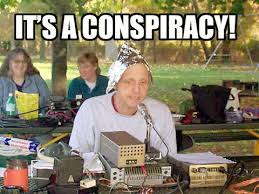
After “climategate” exposed the massive conspiracy by scientists, politicians, economists, the summer heat, and plants and animals to fabricate global warming, we deniers thought we’d finally been vindicated. It was a total coup.

More confirmation of the conspiracy came as investigation after investigation after investigation after investigation cleared the scientists of any wrong-doing and reaffirmed support for the science of global warming. If so many independent investigations found no wrongdoing, the logical conclusion is not that there was in fact no wrongdoing, but that all these investigators are colluding to cover up the facts. So convinced are we of this that we’re launching an investigation of the investigations—this one by one of our own to make sure it says what we want!

But if the lack of any evidence of a conspiracy isn’t enough proof that there is one, we now have the clearest evidence yet: noted socialist behemoth KPMG has just completed an audit of the IPCC chief’s finances—and surprise surprise, it cleared him of any wrongdoing.

As a result, the newspaper that had published the original smear against the IPCC retracted its story and apologized to the IPCC chief.

So even accounting firms are in on the global warming conspiracy? At this point, the only thing that could prove to me that there is no conspiracy to make up global warming is for scientists to say that it isn't happening. Only then could we trust them.

Clearly, the possibility that global warming is, in fact, real is far too simple an explanation.

RELATED POSTS

Riddle me this: who's the king climate conspirator?

The silver bullet proving there's no climate conspiracy

The history of global warming science: where did the conspiracy start?

Follow the money trail to the global warming conspiracy? It leads straight to 1211 Avenue of the Americas

Tuesday, August 24, 2010

Riddle me this: who's the king climate conspirator?

Imagine you're an FDA regulator, and a pharmaceutical company is trying to get your approval for a new drug that they think will generate $4 billion in sales annually for 10 years. But you've only got two scientific studies to go by. The first is a university study, and concludes that the drug has dangerous side effects that will cause brain damage or death in 5% of people who use it. The second study is industry-sponsored - and it concludes that links between the drug and health problems are "inconclusive."

Who you gonna believe? I thought so.

Now, here's a second riddle for you. Which one of the following is the most likely scenario:

1. There's a vast conspiracy among the world's scientists to fabricate massive amounts of evidence about the functioning of the earth's climate so they can impose socialist world government on all of humanity.

2. There's a vast conspiracy by a multi-trillion dollar industry to cover up science that threatens its profits.

Any takers?

Of course, I guess there's a third option: that the vast majority of the world's scientists have been simultaneously and spectacularly wrong, wrong in the same direction, and getting more wrong over the last 40 years. But really, pretending that we're smarter than scientists isn't quite as fun as pretending they're conspiring against us.

RELATED POSTS

The silver bullet proving there's no climate conspiracy

The history of global warming science: where did the conspiracy start?

Follow the money trail to the global warming conspiracy? It leads straight to 1211 Avenue of the Americas

Monday, August 23, 2010

"Emboldening the terrorists"

Last week I argued that "the right of Muslims to build a mosque near Ground Zero is the very essence of what America means and is." Similarly, I argued that the mosque would actually be a strong signal against the power of terrorism to change us, rather than a sign of weakness that would embolden terrorists:

True weakness isn't giving in to Muslims who want to build a mosque, but in giving into our basest tribal fears of outsiders - the very fears that give "terrorism" its name. After the two towers came down, I said, "Build them back!" Far from a memorial, I wanted to tell the terrorists, "we won't be defined by this tragedy - you knock these towers down, we build them right back up." Similarly, a mosque at Ground Zero of the terrorists' handiwork is not a sign that they've won, but a monument to how little their handiwork has changed us - proof that their best efforts to sow fear has not shaken our commitment to freedom... for ALL Americans.

As usual, I've been proven right. From the Wall Street Journal (!), evidence that opposition to the mosque not only undermines American values of religious freedom, but directly aids terrorists in drumming up anger towards America and inspiring new recruits:

Islamic radicals are seizing on protests against a planned Islamic community center near Manhattan's Ground Zero and anti-Muslim rhetoric elsewhere as a propaganda opportunity and are stepping up anti-U.S. chatter and threats on their websites.

One jihadist site vowed to conduct suicide bombings in Florida to avenge a threatened Koran burning, while others predicted an increase in terrorist recruits as a result of such actions.

"By Allah, the wars are heated and you Americans are the ones who…enflamed it," says one such posting. "By Allah you will be the first to taste its flames."[...]

Jarret Brachman, director of Cronus Global, a security consulting firm, and author of the book Global Jihadism, said al Qaeda and other groups have long used imagery from the wars in Iraq and Afghanistan to recruit new members. But the U.S. position has been that those wars are not against Islam and that the U.S. has Muslim allies in the fight.

Anti-Muslim rhetoric in the U.S is different, since jihadists can use Americans' words to make the case that the U.S. is indeed at war with Islam. The violent postings are not just on al Qaeda-linked websites but on prominent, mainstream Muslim chat forums, Mr. Brachman said.

"We are handing al Qaeda a propaganda coup, an absolute propaganda coup," with the Islamic-center controversy, said Evan Kohlmann, an independent terrorism consultant at Flashpoint Partners who monitors jihadist websites.

You read that correctly.  Even the News Corp-owned Wall Street Journal recognizes the truth on this one: every protest against the mosque directly increases the chances that another terrorist attack will happen. It's an irony that's true from schoolyards to street corners to international conflagrations: many conflicts stem not from rational defense of self-interest, but from the emotional overreaction to an affront which in turn escalates an imagined threat to a real one.

As even more evidence that it's not just bleeding-heart liberals who support religious freedom, both the NYPD and FDNY have strongly condemned ads by NY gubenatorial candidate Rick Lazio opposing the mosque:

Unions representing the city’s firefighters and police officers immediately demanded that Mr. Lazio pull his most recent ad, calling it an affront. Ed Mullins, the head of the city’s police sergeants’ union, called the ads “as irresponsible as they are reprehensible.”

Tea Party protesters and New York City fire fighters clearly have different opinions over whether a mosque at Ground Zero is insensitive. I think I know who to side with in this affair.

RELATED POSTS

A pox on shock jocks who talk to block mosques: the case for building the mosque at Ground Zero