Tuesday, December 8, 2009

The history of global warming science: where did the conspiracy start?

New York Times science writer Andy Revkin has been getting a lot of flak for his overly-balanced reporting of the climate crisis. Maybe so, but he's helped put up an awesome interactive graphic on NYTimes.com: a timeline of global warming science since 1820 (click here to go to the interactive version):


One thing that's useful about the graphic is that it helps you visualize just how much climate science falls within the timeframe of the "Climategate" emails, and is therefore even potentially impacted by it.  The answer?  Not much (1996-2009 highlighted by the red box):


And considering that the emails involve just a handful of scientists, that red box should be much shorter, just a horizontal sliver.

So my challenge to those who believe global warming is a hoax, a vast conspiracy "faking millions of points of data, in thousands of scientific papers, in dozens of different scientific fields, and cross-matching them so that they all tell a story that's 180 degrees opposed to reality, AND making sure no one blabs about it": Find where on the timeline the conspiracy began, going through from start to finish.  I've provided a link to an open-access deck on drop.io where you can easily do so - just follow the link and leave a comment.  If I don't get any responses, I'll take the silence as proof that I'm right.


If there's a conspiracy, it has to have started somewhere.  Was Joseph Fourier hatching a secret Marxist conspiracy in 1820 when he first hypothesized the greenhouse effect (when Marx was 2 years old)?  Did the hoax begin in 1859 with John Tyndall, who first discovered that CO2 trapped heat radiation?  Or maybe Svante Arrhenius was the first to realize the potential for riches from climate alarmism, and therefore in 1896 calculated that halving CO2's concentration would lead to global cooling (or perhaps it was his colleague, whose suggestion that burning coal would increase CO2 led Arrhenius to calculate fossil fuels' potential to cause global warming).


Or perhaps the conspiracy began when noted Communist Richard Nixon proposed the creation of the National Oceanic and Atmospheric Administration (NOAA) in 1970 to falsify climate data - nine years before the first National Academy of Sciences prediction of 1.5-4.5 degrees C of warming (on second thought, maybe bringing up Nixon isn't helping my case).  


Or maybe the real conspiracy began on Oct. 21, 1983, when in response to two of the earliest scientific studies on global warming's dangers, Ronald Reagan's science advisor coined the use of the word "alarmist" to describe climate science:
Tonight President Reagan's science adviser, George A. Keyworth 3d, sharply criticized the E.P.A. report and praised the National Academy's. He called the environmental agency's report "unwarranted and unnecessarily alarmist."
"There is no evidence to indicate that the gradual rise in carbon dioxide in the air would have environmental effects pronounced enough to require near-term corrective action," Mr. Keyworth said.

Of course, here's what the Academy's report actually said:
William A. Nierenberg, chairman of the academy's carbon dioxide assessment committee, which prepared the report, said in an interview: "We feel we have 20 years to examine options before we have to make drastic plans, In that 20 years we can close critical gaps in our knowledge."


That was 26 years ago.  If you have conspiracy theorists among your friends or families, send this post to them - maybe they can spot the beginning of the greatest hoax of all time. Otherwise, call your Senators and tell them to support climate and clean energy legislation, and to support the President's efforts to get other nations on board at Copenhagen.


The United States does not wait for a permission slip from other countries before doing the right thing.

RELATED POSTS


Pork barrel spending on skeptical climate research?  Earmarks from Alabama 


What do Climategate and the Simpsons have in common? Skeptics hit "Rock Bottom"

Hope: I'm not the only one

I've been listening to John Lennon's "Happy Xmas (War is Over)" and "Imagine" on repeat for the last couple of days.  It was, after all, 29 years ago today that Lennon was murdered outside his New York apartment - a day I still have trouble coming to grips with, though it happened five years before I was born.


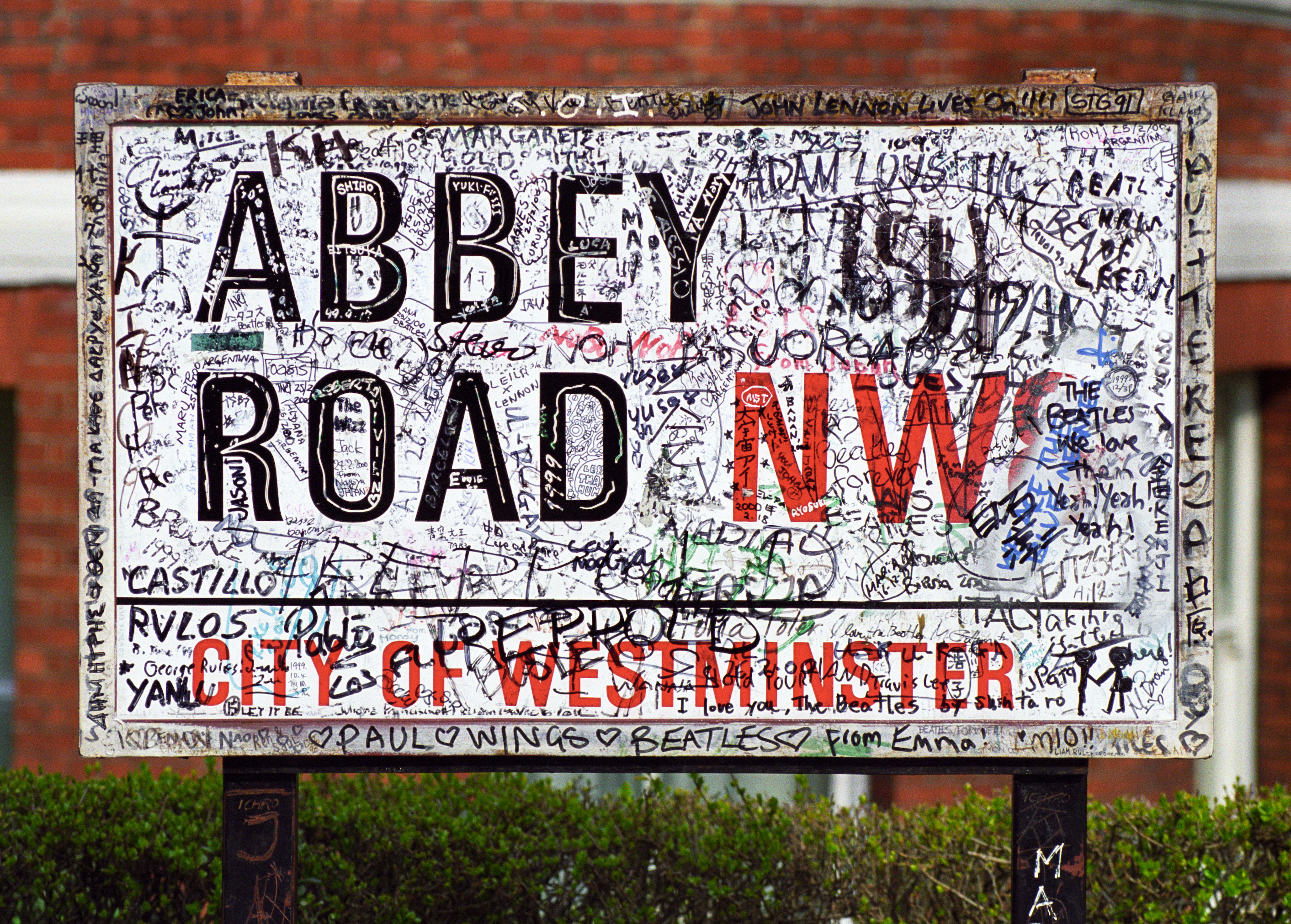
I won't even try to say something new about a man who's one of maybe five or six 20th Century pop musicians who will still be a household name 200 years from now (I'm thinking the others would be Paul, George, Ringo, Elvis, and maybe Michael Jackson and Sinatra) - not that I could do him justice in a couple hours writing a blog entry.  In 2002, the BBC conducted a poll on the 100 greatest Britons of all time.  John Lennon ranked #8, three spots below Shakespeare.  (Paul McCartney was #19, right ahead of Alexander Fleming, whose discovery of Penicillin is credited with extending human life expectancy by eight years.)  When five years ago I visited the street in London where Abbey Road Studios is located, it had almost the feeling of a pilgrimage.  And I'm not the only one who felt that way: the Abbey Road street sign apparently has to be replaced every few days because so many people have signed it.


Imagine a life without the Beatles - it's not something I'd like to do.  I got my first CD on my 10th birthday - it was the Beatles Anthology 2.  That was the end of my life not knowing the Beatles, though John had been dead for 15 years already.  At my 5th grade talent show, while other kids danced to Ace of Base and "This is How We Do It," three friends and I did Sgt. Pepper (I was Paul).  Soon, I'd discovered my dad's old Beatles vinyls; growing up in an era when rock music was the symbol of rebellion, he probably never expected that he'd be able to share the same music as his son.  Twenty years from now, when the mass public has finally expunged "Party in the USA" and autotune from its collective memory, my own kids will still be asking me who the Walrus was, and debating whether Revolver is better than Abbey Road.


I can't describe what makes the Beatles' music so great, ingrained as it is almost into my identity - thankfully, there are plenty who can do so better than I can.


Nor can I add anything new to the tomes explaining how the Beatles' greatness transcended their music.  They'll be forever linked with the optimism and descent into heartache of the 60s - and in many ways, they follow the arc of the Baby Boomer generation, with Lennon as its prophet.  


In the Beatles were captured the essence of youth: both its dynamic energy and passionate frustration with existing order. Paul embodied its boyish yearning: the thrill of love, the anxiety and anger of heartache.  He was perfectly balanced by John's somewhat darker tendencies, and even greater ambition to experiment and push the bounds of what was known.  Though less given to Paul's romantic tendencies, John dreamed no less about love; for him, it was a revolution - not just individualistic love in the romantic sense, but a love for all mankind that recognized our connectedness beyond individual interest.  Indeed, the Beatles established popular music as something which was more than something to nod your head and shake your hips to, but as an emotional force which could cause you to think and dream about the world differently.


Above all, the Beatles represented a willingness to imagine.  With youthful inexperience came the freedom not to be constrained by knowledge of what hasn't worked in the past.  They didn't wait for experience, but took on the world in their 20s.  And they urged others to do the same, regardless of what world leaders' experience told them was "realistic" to hope for.  What else from a band who was rejected by their first label audition with the words, "Guitar groups are on the way out"?  The executive's "experience," likely driven by marketing data, resulted in the worst blunder in the music business's history.


But as the 60s wound down, the dream began to crumble.  The Beatles' own troubles with each other mirrored the global turmoil of 1968-69: an escalating war, violent protests in Chicago, and the election of Richard Nixon on the promise of a return to "law and order."  As the United States seemed to spiral out of control, driven by the restlessness of a Boomer generation at the height of its energetic anxiety, so too did the Beatles.  Though their music continued to peak, their personal relationships deteriorated.  Until finally, in 1970, they broke up, turning the final page of the last decade.  As if youthful energy had rent itself apart.


In the 70s, as the United States wrestled with its identity between the passion of idealism and the security of paycheck, home, and order, Lennon and McCartney similarly drifted apart.  While both continued to churn out top-notch music for several years (Lennon more so), Lennon eventually retreated from his creative work for a five year househusband hiatus, while McCartney contented himself writing silly love songs.  And just as Lennon was about to return to public life to launch a new album, even seeming close to reconciling with McCartney, Mark David Chapman snuffed it all out with five shots in Lennon's back.


So John Lennon's murder wasn't just when the music died, as Time's cover put it at the time - Chapman's bullets also finished off the era of youthful idealism over aged realism, of love over lust for gain, of widespread yearning for something more to life than a secure march to retirement.  After all, Ronald Reagan was elected just one month before Lennon's assassination.  Together, the two events sealed off a shift in America's vision for itself - from one which sought a brotherhood of Man, to one which equated lofty liberty with an atomized pursuit of material gain for oneself and immediate family unit.


I feel that yearning for meaning over materialism, for connectedness over the isolation of unfettered individualism, in my own generation.  And we've got our own issues that will put those values to the test.


This week, the world's leaders in Copenhagen will have to decide whether narrow self- and national-interest outweigh the shared interests of the brotherhood of Man. They may despair that current realities make it impossible to meet climate targets, and fail to seize the opportunity.  If leaders think that, they should remember a Decca Records executive who saw the "reality" that "guitar groups are on the way out," and missed the opportunity to sign the most successful musical group of all time.


In my life, I'll never see the Beatles reunite to perform together.  But I can imagine.  And I can imagine a future that's different from today's.  I can imagine a world where we place greater value on the priceless than on the output of factories; where we act not out of a sense of what hasn't worked before, but out of hopeful urgency for what must now be done.  And I'm not the only one.


Friday, December 4, 2009

Pork barrel spending on skeptical climate research? Earmarks from Alabama

Andrew Sullivan weighed in on “swifthack/climategate” yesterday morning. There’s nothing interesting in the post except for this assertion:

Scientists are as prone as anyone to taking part in "informational cascades," particularly when they are being funded by granting agencies that reward those who continue in an established line of inquiry (can you imagine funding going to a scientist who found a climate counter-trend?) and when they are trying to publish in peer-reviewed journals whose editorial staff refuse to consider papers that do not come up with the expected results.
It's a constant meme that scientists exaggerate claims of global warming to win research grants, but actually, it's pretty easy to imagine skeptic scientists also winning funding. In fact, two of the most vocal skeptics, Drs. Roy Spencer and John Christy at the University of Alabama in Huntsville (UAH), recently had $1.8 million earmarked for their research by Sen. Richard Shelby (R-AL) in the FY 2010 Energy and Water Appropriations bill (p. 144).
Of course, it's not exactly breaking news that Spencer's and Christy's research is funded by the US government. On his website, Roy Spencer makes pains to point out that "Dr. Spencer’s research has been entirely supported by U.S. government agencies: NASA, NOAA, and DOE. He has never been asked by any oil company to perform any kind of service. Not even Exxon-Mobil." (Funny that deniers don't think that government funding biases him - that only happens to the scientists they disagree with.)

What's interesting here is how the funding this time around comes from an earmark - one of only two climate research earmarks in the above appropriations bill. And it seems as though the earmark's author has in mind a very specific outcome for the research he's sponsoring. Here’s the press release from Sen. Shelby’s office:


The University of Alabama in Huntsville Climate Model Evaluation Project - $1.8 Million
This project will directly address the cost of energy for manufacturing, industrial, and residential electricity. This research will show how effective potential policies will be in impacting the climate and how confident one can be in their achieving the intended outcome. The University of Alabama in Huntsville will examine and evaluate climate model simulations to determine the level of performance these models achieve so that policymakers may develop a better understanding of the reliability of these forecasts.

“Given the tremendous burden that any climate change legislation would place on the U.S. economy, it is imperative that any steps are taken only after achieving reasonable certainty that they will produce the benefits necessary to justify the associated costs,” said Shelby. “Information gained from the Climate Model Evaluation Project will be of great benefit to policymakers, ensuring that they are better informed as climate legislation is debated."
Now it's possible that Shelby is just bringing research dollars home to Alabama, but he could have chosen any project at any state university. From the statement above, it's pretty clear why he chose this project: Sen. Shelby is opposed to climate legislation, and was looking for hired guns to make the case that there's not enough certainty about global warming to justify the costs of abating it; it's no coincidence he picked these two scientists to receive helpings from the pork barrel. Indeed, Drs. Spencer and Christy have long been darlings of the denialist community, publishing satellite data which for years showed little to no warming (although after correcting for errors, even their data now show a warming trend, albeit a smaller trend than other data show). If you want to "examine and evaluate" and poke holes in pesky climate models, these are the guys you want doing it. 

What this means, of course, is that the UAH scientists' vocal skepticism about climate changed has not prevented them from winning research dollars, as many deniers would have you think it would. Far from it - after years of telling conservative politicians what they want to hear, they've won a powerful patron in the US Senate. A small Alabama newspaper described it this way:

This might seem a little ironic, but taking the fight to global warming alarmists can be done with aid of the federal government.
None of the seven Alabama congressmen, four Republicans and three Democrats voted in favor of the cap-and-trade legislation that passed in the U.S. House of Representatives last month, so it’s probably safe to assume based on their votes, the global warming issue isn’t a huge concern for the constituency in Alabama.
One of the tactics used by colleges and universities to secure grant money for research has been to apply for it under the guise of using it to achieve a better understanding of global warming, or climate change. However, the University of Alabama at Huntsville (UAH) managed to get in on this with the help of Sen. Richard Shelby.


UAH is the home of Dr. Roy Spencer, a leading global warming skeptic and is also known as the official climatologist of conservative talk show host Rush Limbaugh. And with your tax dollars, for better or for worse, Shelby has managed to secure money for Spencer and his colleagues to conduct research on global warming – some $1.8 million for the Climate Model Evaluation Project.

Here's where it could get more interesting. Because a project with an identical goal as the UAH project is mentioned in the East Anglia emails, and it reveals Dr. Christy was corresponding with a former oil industry PR man to try to win funding for it. In the email to two Energy Dept. officials in the Bush administration, Christy describes how he would like to use his satellite data to vet climate models, and how past requests for funding had been rejected:


From: John Christy [_mailto:john.christy@xxxxxxxxx.xxx_]
Sent: Tuesday, October 23, 2007 9:16 AM
To: Strayer, Michael
Cc: Salmon, Jeffrey
Subject: Climate Model Evaluation

Dr. Strayer:

Jeff Salmon is aware of a project we at UAHuntsville believe is
vital and that you may provide a way to see it accomplished.


This is pretty clearly an introduction - Salmon had passed along Strayer's contact info to Christy to help him win research funding for the "vital" project. Strayer seems like an innocent bystander, but who is this Jeff Salmon anyway? According to Climatesciencewatch.org:

Prior to moving to DOE, from 1991-2001 he was Executive Director of the George C. Marshall Institute, a key actor in the global warming disinformation campaign. In 1998 he participated in the development of a now-notorious oil industry-sponsored plan to wage a campaign against the mainstream science community on global warming. Before that, he was senior speechwriter for Dick Cheney, when Cheney was Secretary of Defense.
The purpose of the 1998 campaign was to


Recruit a cadre of scientists who share the industry’s views of climate science and to train them in public relations so they can help convince journalists, politicians and the public that the risk of global warming is too uncertain to justify controls on greenhouse gases like carbon dioxide that trap the sun’s heat near Earth... Victory will be achieved when… recognition of uncertainty becomes part of the "conventional wisdom."
So a man responsible for much of the disinformation out there about global warming is the same person who was helping Christy navigate the DOE in his search for funding. What was he hoping to fund? The email continues:


As you
know, our nation's energy and climate change policies are being
driven by output from global climate models. However, there has
never been a true "red team" assessment of these model
projections
in the way other government programs are subjected to hard-nosed,
independent evaluations. To date, most of the "evaluation" of
these
models has been left in the hands of the climate modelers
themselves. This has the potential of biasing the entire process.

It is often a climate modeler's claim (and promoted in IPCC
documents - see attached) that the models must be correct because
the global surface
temperature variations since 1850 are reproduced (somewhat) by
the
models when run in hindcast mode. However, this is not a
scientific
experiment for the simple reason that every climate modeler
saw the
answer ahead of time. It is terribly easy to get the right answer
for the wrong reason, especially if you already know the answer.

A legitimate experiment is to test the models' output against
variables to which modelers did not have access ... a true blind
test of the models.

I have proposed and have had rejected a model evaluation
project to
DOE based on the utilization of global datasets we build here at
UAH. We have published many of these datasets (most are
satellite-based) which document the complexity of the climate
system and which we think models should replicate in some way,
and
to aid in model development where shortcomings are found.
These are
datasets of quantities that modelers in general were not aware of
when doing model testing. We have performed
a few of these tests and have found models reveal serious
shortcomings in some of the most fundamental aspects of energy
distribution. We believe a rigorous test of climate models is in
order as the congress starts considering energy reduction
strategies which can have significant consequences on our
economy.
Below is an abstract of a retooled proposal I am working on.

If you see a possible avenue for research along these lines,
please
let me know. Too, we have been considering some type of
partnership
with Oakridge since the facility is nearby, and this may be a way
to do that.

John C.


Understanding the vertical energy distribution of the Earth's
atmosphere
and its expression in global climate model simulations

John R. Christy, P.I., University of Alabama in Huntsville

Abstract

Sets of independent observations indicate, unexpectedly, that the
warming of the tropical atmosphere since 1978 is proceeding at a
rate much less than that anticipated from climate model
simulations.
Specifically, while the surface has warmed, the lower troposphere
has experienced less warming. In contrast, all climate models we
and others have examined indicate the lower tropical atmosphere
should be warming at a rate 1.2 to 1.5 times greater than the
surface when forced with increasing greenhouse gases within the
context of other observed forcings (the so-called "negative lapse
rate feedback".) We propose to diagnose this curious phenomenon
with several satellite-based datasets to document its relation to
other climate variables. We shall do the same for climate model
output of the same simulated variables. This will
enable us to propose an integrated conceptual framework of the
phenomenon for further testing. Tied in with this research are
potential
answers to fundamental questions such as the following: (1) In
response to increasing surface temperatures, is the lower
atmosphere reconfiguring the way heat energy is transported which
allows for an increasing amount of heat to more freely escape to
space? (2) Could there be a natural thermostatic effect in the
climate system which acts in a different way than parameterized
convective-adjustment schemes dependent upon current
assumptions of
heat deposition and retention? (3)
If observed atmospheric heat retention is considerably less than
model projections, what impact will lower retention rates have on
anticipated increases in surface temperatures in the 21st
century?


This last paragraph probably gives a sense for what Sen. Shelby's $1.8 million in pork spending is going to fund: "evaluating" climate models using the UAH satellite data that are so prized by the denial movement. The motive? "We believe a rigorous test of climate models is in order as the congress starts considering energy reduction strategies which can have significant consequences on our economy." Which is code for, "we want to cast doubt on climate models so Congress never passes energy reduction strategies."


In other words, it's possible that Christy was receiving help on the inside - not from a climatologist or a bureaucratic grunt, but from a PR professional who had previously led climate science disinformation campaigns on behalf of the fossil fuel industry. I'm making some conjectures here, but we at least know that Christy sought help from Salmon, and that Salmon made introductions for him. 

It's long been known that the fossil fuel industry has funded junk science against global warming. But Spencer and Christy have made pains to distance themselves from the carbon lobby. Remember, Roy Spencer's website states bluntly that "He has never been asked by any oil company to perform any kind of service. Not even Exxon-Mobil." But now we find out that in 2007, an ally of the oil companies was helping skeptics at UAH to secure funding for research. What happened after that letter is anyone's guess, and who knows what role Jeff Salmon played in follow up. But two years later, your tax dollars are being earmarked for vocal skeptics to “evaluate” climate models, by a US Senator who fears climate legislation will “place a tremendous burden on the U.S. economy.” And remember, Jeff Salmons is still in the DOE.


I don't really have a problem with my tax dollars going to fund skeptical research. It's good to have the models subjected to analysis by devoted skeptics - if even Christy and Spencer can't find anything wrong with them, it strengthens the case further (so I guess we ought to be watching for what comes out of UAH in the next year or so).


My point is simply this: the myth of the climate scientist raising alarm to generate research dollars is officially busted. The fact is, there are plenty of politicians who want this global warming business to just go away so they don't have to ask their constituents for sacrifices. Meaning there are plenty of government dollars to go around for research skeptical of climate change - if only there were enough scientists to take advantage of it. As I've argued before, every conceivable material incentive should be pushing scientists away from the consensus, given the number of people desperate to believe that global warming is a hoax. Getting research grants from oil companies or think tanks, selling books, getting time on talk shows – it’s all easier when people are looking for a viewpoint, and you’re one of the few people who’s got it. And yet, 97% of climatologists have refused to buck the consensus, despite the vast economic rents to be earned by doing so.


Pork barrel spending for skeptical climate research? Who’s feeding at the trough now?

RELATED POSTS


Wednesday, December 2, 2009

Follow the money trail to the global warming conspiracy? It leads straight to 1211 Avenue of the Americas

Oh, those greedy scientists, always out to cheat oil executives out of justly earned profits. When I was an undergrad at Harvard, I saw the “highly profitable global warming industry” firsthand, having had a Nobel Prize-winning, IPCC-reviewing, climate "expert" for a housemaster.

Every day, while earnest investment banking hopefuls toiled away at their Capital Markets midterms, I’d see my scientist housemaster driving up in his Bentley, swaggering to the lab carrying his gold-plated microscopes, crystal Petri dishes, and diamond-encrusted mass spectrometers. Some days, he’d fuel his Bunsen burners with dollar bills – just because he could. Honestly, did anyone really think research science was about the pursuit of truth, and not of power and profits? If scientists were really interested in knowledge, they would have become oil executives.


Sadly, if you’re to accept the “Climategate proves global warming is a hoax” hype, that’s exactly what you must believe: that a vast majority of the world’s climate scientists are secretly conspiring to falsify their findings in a nefarious plot to gain control over the world’s resources. It sounds absurd to reasonable people, but then you see blog comments like this:


1:57 am December 1, 2009
John wrote:

Understand there are people who cant fathom that Global Warming Climate Change was a political monster that had nothing to do with science.. Leftists, Communists, eliteists snakes that prey on our children in their quest to take over the world.. One would think the stewarts of the planet would be happy we are not all doomed? Far from it my friends they couldn’t care less.. POWER and killing Capitalism is their game..

And that's pretty much par for the course in the skeptic camp - not just for random blog commentors, but also for mainstream conservative voices. John Hindraker spares no hyperbole over at PowerLine (h/t Blogometer):


There's no question that it's a fraud, but whether the "scientists" who have been promoting the global warming hoax have committed felonies is not yet clear. They have taken countless millions of dollars in government money and used it to produce fraudulent results, which may very well violate criminal statues both here and in the U.K. And the "scientists'" destruction of data that was subject to valid Freedom of Information Act requests may have been criminal under British law; that's a subject on which I am not an expert.

I'd love to see the hoaxers behind bars, but it isn't likely to happen, if only because the government officials who would have to bring charges are their allies. Criminal liability aside, the fact is that these "scientists" nearly pulled off the greatest fraud in world history. Compared to them, hoaxers like Enron and Bernie Madoff were pikers. The global warming alarmists sought to impose trillions of dollars in losses on the world economy, while living high off the hog on taxpayer money. If Bernie Madoff gets life, what would be the appropriate sentence for Michael Mann, Phil Jones, Keith Briffa, and the others?

Really? Comparing university scientists to Bernie Madoff? Maybe it makes me an elitist to say so, but John Hindraker could use some help with his math. Madoff swindled investors out of about $65 billion - that's THREE TIMES as much as the US Federal Government spent on climate science - cumulatively - from 1993-2004. Hardly the picture of scientists "living high off the hog" to buy 24's for their Benzes with taxpayer money.

And "trillions of dollars in losses on the world economy"? Maybe John doesn't understand the difference between a "loss" and an "investment" - the latter of which by definition implies a reduction in current living standards in exchange for future gains. Reducing CO2 doesn't mean shuttering factories: it means inventing new technologies that reduce energy use and produce clean energy more cheaply. Sounds like good old-fashioned capitalism to me. In fact, McKinsey estimates that stopping global warming will cost the world only about 0.6% to 1.4% of global GDP by 2030 - or half of what we spend on insurance each year. Yes, that means "trillions" of dollars, but when you're talking about all the money produced in the world over 20 years (roughly $1.8 quadrillion), a trillion just ain't that big.

Of course, my biggest problem with the post is the arrogant conviction from a writer who's probably never taken a course in climate science. "Scientists" in quotes? "No question" that it's a fraud? Talk about a lack of skepticism - and of basic self-awareness. Like the 40% of Americans who ignore doctors' advice because of information they find on the internet, John Hindraker should read my post here on "climochondriacs" and the need for healthy respect for expert opinion.

The accusation of fraud in pursuit of financial gain is especially absurd given that if scientists were really so fast and loose with the truth, they probably wouldn't be scientists at all, since a fraudulent modeler could make so much more money building financial models for investment banks. Studies consistently show that 50-75% of mergers and acquisitions - investment banks' bread and butter - destroy value for the merged company.

How do investment banks continue to get away with selling a product that makes half of their customers worse off? Because they hire armies of analysts to massage model numbers until they show that a merger will produce gains for their clients. They don't call it a "
pitch book" for nothing. Firms that make bucks by cooking the books would seem like a natural home for money-grubbing climate modelers with a flair for treachery. And yet Michael Mann and Phil Jones remain in the dusty halls of academia modeling the interaction of heat, air, and water, foregoing the vast fortunes a dishonest modeler could make on Wall Street.

So it's especially ironic when one of the most widely-cited sources bemoaning the "fortunes" raked in by climate scientists is a publication with the words "Wall Street" in its name. This op-ed exposes the £764,055 "haul" taken in by CRU researcher Tim Osborn between 2001 and 2007. Of course, on a per year basis, that "haul" is just 23% the average 2009 salary at Goldman Sachs, and most of it goes to pay for research, not salary.

Or what about the $55 million in funding for "environmental research" Michael Mann helps to "pull in" each year for Penn State? Well first off, there's a bait-and-switch, replacing "climate science" with the much broader field of "environmental research" to produce a bigger dollar sign. Even if that $55 million were kept just for the Dept. of Meteorology of which Mann is a part, it'd have to be split between 32 faculty members and 36 research and teaching staff, plus administrative expenses.

And remember, most of this funding must go directly into paying for research. So unlike subsidies for oil companies, science grants hardly line their recipients' pockets with taxpayer money.

Not only does the idea that climate scientists are promulgating fear to enrich themselves fail to pass the test of basic arithmetic - it defies elementary economics and business thinking. Any economist knows that competition drives down profits. Marketers refer to the importance of having a differentiated product or message. The points are the same: to acquire money, fame, or any of the things people normally seek, you have to say something different. Consensus just isn't profitable.


Now, 97% of climatologists agree that global warming is due to human activities, but 49% of American consumers dispute that view - and are desperate to hear voices that confirm their skepticism. Indeed, there are powerful economic rents to be earned from being part of the 3% of skeptical scientists. Publish a paper supporting the consensus, and you're just another brick in the IPCC wall. But take to the air with skeptical views, and all of a sudden you're the darling of half the country: you can sell books, make the rounds on the talk shows, and testify before Congress for skeptical politicians. And if government funding dries up, fossil fuel companies have plenty of dollars for your "research." In fact, it's easier to get your research funded as a skeptic, since there are fewer other scientists competing for those non-governmental dollars - and no Freedom of Information Act to scrutinize your work. While poor, naive scientists are toiling away finding the same results as everyone else, a few entrepreneurs with enterprising views of the truth have discovered that there's a vast, untapped, and hungry market for denial. And they're taking full advantage of it.

No matter how you look at it, scientists have everything to gain from being a skeptic, and everything to lose from joining the consensus. If views on climate science are driven by desire for material gain, every conceivable incentive should be driving more scientists to the skeptic camp. But they're not. The fact that 97% of climatologists continue to ignore the market for climate change denial suggests that money is not their primary motivation, and/or that the truth of climate change is so strong that in 97% of scientists' eyes, the immorality of misleading the public outweighs the profit to be had from doing so. To suggest that climate science is driven by financial concerns is a failure to grasp basic economics.

If the WSJ is publishing this kind of anti-economic rubbish, I'm certainly not going to trust their reporting on business or stocks. If scientists were really in it for the money, the Journal's editors might have had an easier time finding one to interview for their story - it'd be just a 30 minute subway ride down to 85 Broad Street.


RELATED POSTS

Hackers, health care, and hot air: do we need to protect "climochondriacs" from too much information on the web?

Tuesday, December 1, 2009

Hackers, health care, and hot air: do we need to protect "climochondriacs" from too much information on the web?

Perhaps the most revealing poll I've ever read is a recent Pew study which found Americans increasingly make up their minds regardless of expert opinion—and it’s not the poll you’re thinking of. In November’s Harvard Business Review:

A recent Pew study found that nearly 40% of Americans say they have doubted a medical professional’s opinion or diagnosis because it conflicted with information they’d found online. [UPDATED: The original poll was commissioned by health care consulting firm Envision Solutions, LLC, and published in 2008. You can see an overview of the results here]


Yes, this seemingly innocuous poll in fact represents the culmination of a centuries' long trend toward both the freedom to seek knowledge - and to be free from knowledge. This poll explains at least part of what's wrong with our health care system, and almost all of what's wrong with our debate over climate change. Why? First, a digression.


Growing up as a Southern Baptist preacher's kid in Oklahoma, where Sen. Jim Inhofe regularly wins 57% of the vote and the State House floats resolutions denouncing evolution, I've always been fascinated by the intersection between science and public opinion. Like all Protestants, we Baptists have a strong tradition of the "priesthood of all believers": every believer's right to access God (or Truth) for him or herself, without the intermediation of a priest (or expert). It's likely that this religious doctrine is at the root of many of our secular (though no less sacred) democratic values; if the peasant's interpretation of scripture is just as valid as the priest's, you're not far from "all Men are created equal."


Many in America seem to take the equality of Man to imply an equality in Men's opinions. In fact, this faith in the wisdom of the common man over expert knowledge pervades American politics - especially among conservatives. William Buckley famously quipped, "I should sooner live in a society governed by the first 2000 names in the Boston telephone directory than in a society governed by the 2000 faculty members of Harvard University." Bill Kristol goes further in a column praising Sarah Palin, entitled "Here the People Rule":


Most of the recent mistakes of American public policy, and most of the contemporary delusions of American public life, haven’t come from an ignorant and excitable public. They’ve been produced by highly educated and sophisticated elites.


Needless to say, the public’s not always right, and public opinion’s not always responsible. But as publics go, the American public has a pretty good track record.


Nobody likes to be made to feel dumb, but to some in America, a claim to privileged knowledge carries connotations of elitism - indeed, violating the very notion that all Men are created equal. As long as the Layman has access to the same raw information as the Expert, he should be able to come to an equal - or superior - conclusion.


And with the advent of the Internet, the Layman now has access to an explosion of information - much of it user-generated. Should this new-found wealth of information be celebrated or feared? Certainly, open access to accurate information can lead to more informed choices. But sourcing insight from the crowd instead of experts also has a dark side. For laypersons without the proper training and background knowledge to interpret raw information, too much of it can be confusing; in the hands of those willing to manipulate it for political gain, it is positively destructive.


And this brings us back to the Pew poll. More Americans are finding health information online; used properly, this information can help patients know when to seek treatment and which questions to ask of their doctors. But what happens when 40% of Americans go further, and stubbornly substitute their own judgment for that of the doctor? What happens when they refuse to believe a diagnosis that there's nothing wrong, or when they demand treatments they happened to read about online? Four things start to go wrong.


First, people make decisions based on disinformation. When people search for information online, they often get it from sources that aren't very credible. According to one study, "although 8 in 10 American adults have searched for healthcare information online, 75% refrain from checking key quality indicators such as the validity of the source and the creation date of medical information." One doctor points out (on WebMD, ironically), "A lot of the stuff on the Internet, especially on health-related bulletin boards, is pure impression and anecdote, and they just don't have a lot of scientific validity."


Second, you get a lot of hypochondriacs imagining symptoms they don't have. The phenomenon is so widespread there's even a term for it: "cyberchondria." Doctors describe the problem in a story on NPR:


The patients come in quoting commercials they've seen on TV, requesting pills or diagnostic tests, describing new treatments for diseases they're convinced they have.


"Five or six times a day, people come in saying, 'I looked this up on the Internet.' Or, 'I saw this and I wonder if I could have this?' " Moore says.


Sometimes her patients are right; more often they're wrong, she says. But Moore isn't judgmental about their self-diagnoses. She views it as a natural response to the ocean of health information that surrounds every modern person, and relates it to her own experience in medical school.


"There's a syndrome in medical school they teach us about called 'medical student syndrome,' " Moore says. When medical students learn about a disease for the first time, it's common for them to become convinced, at least temporarily, that they themselves are afflicted.


"Every time you start reading about this disease, you say, 'Oh my god, I have that!' Then you read about another disease and you say, 'Oh my god, I have that, too!' " Moore says.


"So, the same thing that triggers medical students to worry that they have these diseases is part of what triggers people watching television or surfing the Internet to believe they have these conditions. Continued re-exposure to suggestions of symptoms makes people look for things."


The problem, says Moore, is that it can take a lot of work to convince her patients that their own diagnosis is wrong.


This is backed by statistical evidence. For example, a recent longitudinal study of 515 individuals (White and Horvitz, 2008) found that searching for common symptoms online can lead web users to discover information on rarer, more serious diseases, escalating anxiety that they may have these diseases themselves. The study found this anxiety persists over time and affects medical decisions. The authors put it bluntly:


Benigeri and Pluye [2003] show that exposing people with no medical training to complex terminology and descriptions of medical conditions may put them at risk of harm from self-diagnosis and self-treatment. These factors combine to make the Web a potentially dangerous and expensive place for health seekers.


Third, you get higher health care costs. Around one out of every five patients is considered "difficult" by doctors; these patients "ignore medical advice, complain persistently, insist on unnecessary tests and do not express appropriate respect." It's not just the hypochondriacs demanding tests for diseases they don't have; you also get people asking for treatments they read about online or saw on TV advertisements - and most doctors oblige, lacking the time to explain to these "demanding patients" why they're wrong. NPR continues:


[Dr.] Zebley says that several times a week a patient comes in asking for a test that he is 99.99 percent sure would be a complete waste of time. But Zebley will almost always give the patient the test they request, even though he knows it will cost money and time…


So doctors will order you tests you don't need. And they will write you prescriptions for pills you probably shouldn't take — which is a huge problem with antibiotics, for example.


And, Zebley says, doctors even do operations, like back surgery, that they probably shouldn't do. They do it, he says, because you want it, have become convinced that you need it, and doctors fear that if they don't give it to you, they'll lose you.


It's unclear how high patient demands drive up costs in our health care system. [Dr.] Moore estimates that about 30 percent of the costs in her practice are driven by patient requests.


Last, you get a strained doctor-patient relationship. When patients, supposedly "empowered" by information they found online, don't get the diagnosis or treatment they wanted, they often grow suspicious of the doctor, suspecting the doctor is hiding something. Maybe it's financial gain, or maybe some vast doctor's conspiracy - or maybe perceived arrogance or lack of concern in the doctor. Whatever it is, it's a real concern:


Barsky and Fallon say hypochondria often breeds suspicion and distrust between a sufferer and his or her physician. Some doctors may be too quick to dismiss the worries of hypochondriacs, and hypochondriacs are likely to ruin relationships with good physicians by second-guessing them from the start.


Hypochondriacs may "get suspicious when their doctor doesn't give them a referral or a test they ask for," says Fallon. "They can feel like they're not being listened to, and so they'll go shopping for another doctor and wind up repeating the process."


In other words, there's a reason we trust doctors' judgment over holistic healers' or our own: not everyone goes to med school, and therefore not everyone can make informed medical decisions. Cyberchondriacs and demanding patients both highlight some of the dangers of making scientific information available en masse to the public. The more information we laypeople have, the more we can feel like "experts," even if we lack the training or perspective to actually interpret the raw information. As a result of trusting our own judgment instead of experts', we as laypeople can become overconfident in our opinions, leading to very bad decision-making - for ourselves and society. Hypochondriacs, at least, are better off protected from information, placing their faith in doctors' educated opinions rather than their own.


Which, finally, brings us to Hackergate/Climategate. At this point, I feel like the parallels between health information and Climategate should be fairly obvious, but I'm going to make it explicit and give the climate conspiracy theorists their own term: "climochondriacs." Just as the web has created a host of cyberchondriacs, it seems also to have created a much more dangerous army of climochondriacs: people who become paranoid that global warming is a scam, based on information they find on the internet, and cannot be convinced by objective reassurance from experts. With this description of the actual DSM IV condition of hypochondria, the term is just too perfect:


The small fraction (1-5%) of the general population afflicted with the disorder hypochondria are particularly predisposed to the emergence of unfounded concerns, especially since they are often undiscerning about the source of their medical information [Barsky and Klerman 1983]. Studies have shown that hypochondriacs express doubt and disbelief in their physicians’ diagnosis, report that doctors’ reassurance about an absence of a serious medical condition is unconvincing, and may pay particular attention to diseases with common or ambiguous symptoms (p. 4).


The only question that remains: should scientists protect climochondriacs from raw information on climate change? Should scientists like Phil Jones and Michael Mann be forced to be provide open access to their data, knowing climochondriacs will misinterpret it?


That would be easy to answer - if prominent skeptics were willing to show a little healthy respect for the experts by not deliberately misinterpreting their work. Unfortunately, this looks like too much to ask. A good example is the controversy over "adjustments" to raw climate data. For example, denial sites like WUWT have "revealed" that raw temperature data in New Zealand differs from official data. Nevermind that the New Zealand scientists have very good reasons for adjusting the data - deniers like Anthony Watts just aren't impressed, and would rather trust some guy on the internet than listen to the experts who actually do climate science. To people who don't understand how climate science is done, "adjustment" sounds suspiciously like "fraud." (For a great example of this, check out this comment at Dot Earth, in which a skeptic who doesn't understand the definition of "temperature anomaly" wastes a climate scientist's time emailing back and forth to accuse him of fraud.)


Another example is Anthony Watts breathless unveiling of "the deleted data from the 'hide the decline' trick," with the deleted data highlighted in red. And what do you know, the red part trends downward. Of course, to people who actually do paleoclimatology, this is merely indicative of the well-documented "divergence problem" (explained here and here), and perfectly within the bounds of normal science. However, knowing that if this data were publicized, denial blogs would post big red graphs of the "decline" without explaining that it does not represent actual temperatures, the study's authors opted not to give "fodder to the skeptics." How do I know they used those words? Because Watts quotes them in the very same post in which he uses the study as "fodder." Maybe the scientists should have been more forthcoming, but Watts is sure giving them a good reason not to.


Note that I am not advocating blind deference to experts - experts can certainly be wrong too. But it is important that we as laypeople maintain a self-aware respect for the people who spend years of their lives studying complex issues, and recognize the limitations in our own understanding of the issue; this applies both to doctors and to climate scientists. I'm not a scientist, and haven't studied climate science in depth, but I have the self-awareness to give those who do study it the benefit of the doubt. ("Those who do" does not include self-proclaimed "auditors.")


Denialist commentators, on the other hand, often jump to the conclusion that scientists have no good reasons for making the adjustments to data that they do. The irony here is that while deniers call for skepticism and emphasize the uncertainties in climate science, they show such certainty in their own conviction that scientists they have never met are fraudulently falsifying data as part of a vast conspiracy to steal their money and grab power. Given these commentators' lack of training in the intricacies of climate science, they ought to at least give scientists the benefit of the doubt, and raise issues with scientists themselves before making unvetted - and potentially misleading - assertions in public. With the freedom to view propriety data comes the responsibility to use it honestly.


Ultimately I think data should be as openly available as possible to avoid even the appearance of impropriety - climate scientists have the moral high ground, and should do everything to maintain that position. As long as deniers believe climate science is the product of a conspiracy, they will never trust any amount of evidence produced by climate scientists. The most important point is therefore to ensure deniers have no possible justification for their claims of a cover-up, even if it means giving them fodder for their misinterpretations of objective data. As Romans 12:20 puts it, "If your enemy is hungry, feed him; if he is thirsty, give him something to drink. In doing this, you will heap burning coals on his head."


RELATED POSTS


What "hiding the decline" really looks like

A lesson in denial: Eric Cantor videos, global warming deniers, and how to say something without saying anything


What do Climategate and the Simpsons have in common? Skeptics hit "Rock Bottom"


A different perspective on "you lie!"